
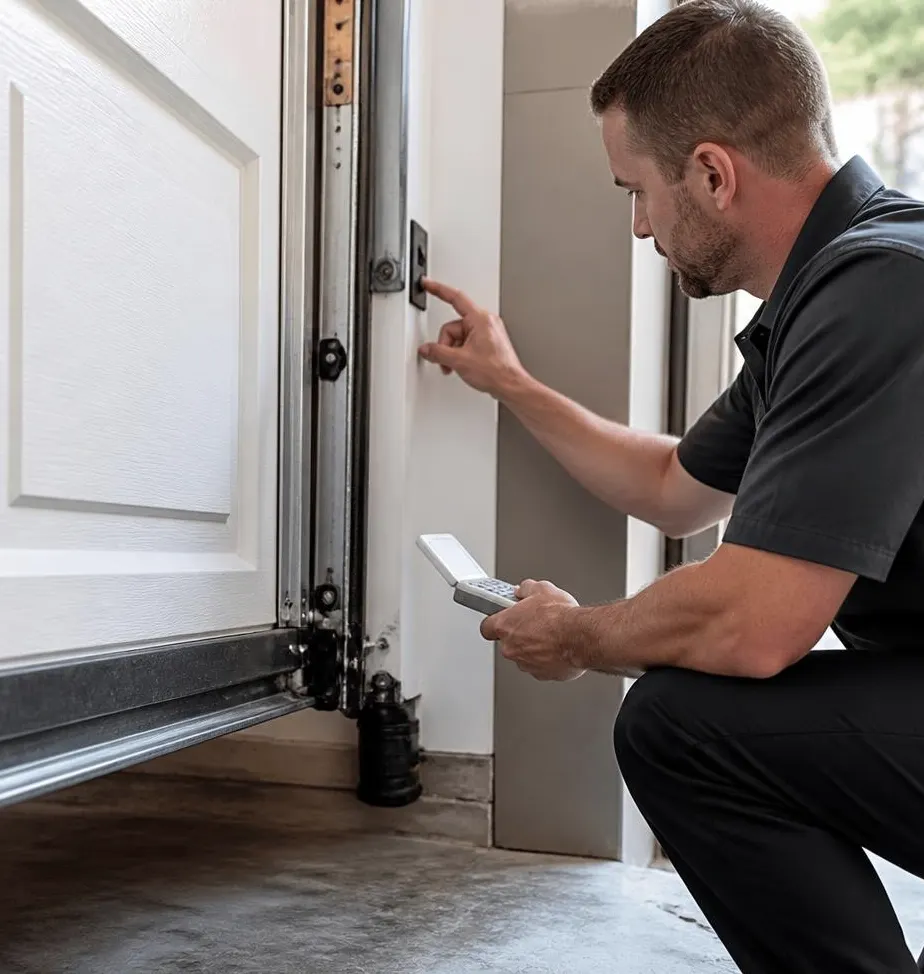
What Another Season of Guessing Costs You
Every month you leave the force setting too high "because it keeps stopping halfway," you're asking the opener to push or pull through resistance instead of stopping. That resistance has to go somewhere. Usually it goes into the top panel, the rollers, the track brackets, or the opener's own gears. A motor that's quietly cooked by over-force for a year doesn't fail gracefully — it fails on a Friday night. A door that's been slammed into the floor by excessive down-force cracks panels or bends the bottom section, which on a wood or wood-composite door means swelling and rot gets a head start once winter rain arrives. None of this shows up as a single dramatic event. It shows up as "the door's just been weird lately" for months before something actually breaks.
Travel Limits vs. Force: Two Different Jobs
These get confused constantly, which is usually the actual argument.
- Travel limits tell the opener exactly where "fully open" and "fully closed" are. Think of them as position markers. If the down-limit is set too low, the door tries to keep traveling after it's already touched the floor — that's the grinding or shuddering sound right at the end of closing. If the up-limit is off, the door either stops short of fully open or slams into the header.
- Force is how much push or pull the motor is allowed to apply to get the door to those positions. It's not about where the door stops — it's about how hard the opener tries before it decides something's wrong and reverses or stops.
Set the limits correctly and the force low, and the door should barely need any muscle to complete a normal cycle. If it needs a lot of force to travel smoothly, that's not an opener problem — that's a spring or balance problem, and cranking up the force just masks it while doing damage.
Why These Settings Drift in This Climate
Garage doors in this part of California deal with real seasonal swings — hot, dry stretches that can dry out and shrink wood doors or loosen hardware, followed by winter rain that swells panels and adds moisture weight, plus the occasional earthquake-related shift in the frame or track alignment. Any of that changes how much resistance the door naturally has. A force setting that was correct in August can be wrong by December simply because the door itself is heavier, stiffer, or sitting slightly differently in the track. That's normal. What's not fine is responding to it by permanently cranking the force dial instead of checking why the resistance changed.
The Settle-the-Argument Test
- Disconnect the opener (pull the emergency release cord) and lift the door by hand halfway. Let go. A properly balanced door should stay put, not slam down or fly up. If it moves on its own, the problem is spring tension, not opener settings — stop here and don't touch the force dial.
- Reconnect and watch a full cycle. Does it stop smoothly at full open and full close, or does it grind, reverse, or stop short?
- Do the reversal test. Place a 2x4 flat on the ground where the door closes. The door should reverse immediately on contact. If it keeps pushing down on the wood, the force is set dangerously high — that's a safety issue, not just a maintenance one.
If the door passes the balance test but fails the travel or reversal test, the fix is usually a few minutes with the opener's adjustment dials or app settings. If it fails the balance test, the opener isn't the actual problem — don't adjust force to compensate for bad springs.
When to Call East Los Angeles Garage Door
If the door isn't balanced, or you've already adjusted force and it's still fighting the door, stop experimenting. We handle garage door opener repair and installation along with spring replacement, and we check both together — there's no point tuning an opener to compensate for springs that are doing the wrong job. We'll test balance, reset travel limits properly, and set force to the minimum that still closes the door reliably.
If your opener's been fighting your door all season, call East Los Angeles Garage Door for a straightforward inspection and fix — serving East Los Angeles, CA and nearby communities.